



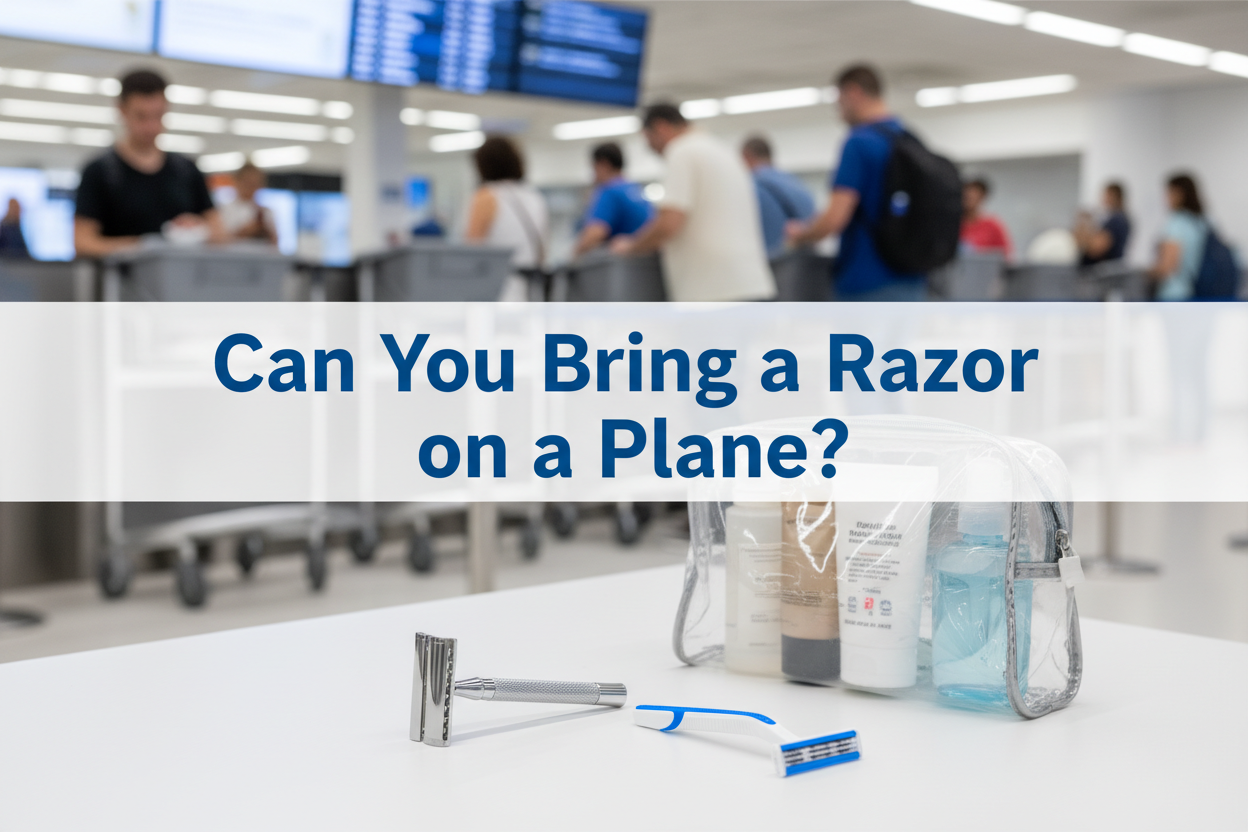
Can You Bring a Razor on a Plane? TSA Rules Explained (2026)
March 13, 2026 • 12 min read
You're packing for a trip, a Dopp kit in hand, when you suddenly freeze. Can you bring a razor on a plane? Will TSA take it? Do blades count? Does it matter if it's a safety razor or a disposable?
Most shavers ask these questions, and the fact that you're unsure isn't your fault. The TSA has actually changed its safety razor policy multiple times in the last few years, which is why you'll find conflicting answers all over the internet. Forums are full of travelers who packed the same shaving razors, flew from different airports, and had completely different experiences at the checkpoint.
Here's what you actually need to know, sorted by razor type, with no "it depends" runaround. A little planning before you pack goes a long way when you're boarding an airplane.
-
Disposable and cartridge razors: carry-on, no problem.
-
Safety razor handles: carry-on is fine, but blades must stay out entirely.
-
Safety razor blades and straight razors: checked bag only.
-
Electric razors: zero restrictions, carry-on or checked, either way.
That's the short version. Read on for the full breakdown, why so much confusion exists, and what to do if TSA confiscates your razor anyway.
Quick Reference: TSA Razor Rules (2026)
|
Razor Type |
Carry On |
Checked Bag |
|
Disposable razor (BIC, Schick Xtreme) |
Yes |
Yes |
|
Cartridge razor (Gillette, Venus, Mach 3) |
Yes |
Yes |
|
Replacement cartridges |
Yes |
Yes |
|
Safety razor handle (no blade in carry-on) |
Yes |
Yes |
|
Safety razor blade/ loose DE blades |
No |
Yes |
|
Electric razor |
Yes |
Yes |
|
Straight razor |
No |
Yes |
|
Loose blades of any kind |
No |
Yes |
Source: Official TSA website
One thing worth knowing before we go further: the TSA's official policy says the final call at the checkpoint belongs to the individual officer. That's not a loophole or a disclaimer. It's printed right on their website. More on what that actually means in practice below.
Why Everyone Is Confused About TSA Razor Rules

Before we get into the specifics, let's talk about why this is confusing in the first place. Because it's not just you.
The TSA’s written rule on safety razors has been fairly consistent for years: the razor itself is allowed in a carry-on bag, but the blade is not. Razor blades are considered sharp objects and must go in checked luggage.
The confusion comes from inconsistent enforcement at airport checkpoints.
Travelers in wet shaving communities have reported cases where bladeless safety razors passed through security without issue at one airport, only to be pulled aside at another. Some TSA agents interpret the X-ray image of a safety razor more cautiously and request a manual inspection to confirm there’s no blade installed.
Part of the challenge is how safety razors appear on screening equipment. An assembled safety razor without a blade can look very similar to one with a blade installed on an X-ray scanner. That sometimes leads to extra screening or, in rare cases, confiscation if an officer believes the item violates the rules.
The official guidance from TSA (Transportation Security Administration) is clear: a safety razor is allowed through the checkpoint without the blade installed. Razor blades themselves are not permitted in carry-on bags.
Even with that written rule, travelers occasionally encounter different interpretations at different airports. That’s because TSA officers have discretion at the checkpoint, and their decision is final.
What You Can Bring in Your Carry-On

Disposable Razors
Fully disposable razors are allowed in carry-on bags. The BIC Sensitive, Schick Xtreme3, any drugstore two-pack you throw in a toiletry bag. The blade is encased in plastic and can't be separated from the handle, which is why TSA has no issue with them.
Not the closest shave you'll ever get, but they're a convenient option for keeping in your hand luggage, and they pass through every security line in every airport without a second look.
Cartridge Razors
Gillette Fusion, Mach3, Schick Hydro, Venus, Billie. All of them are allowed in carry-on. The blade cartridge is enclosed in plastic and can't be easily detached, so TSA treats it the same as a disposable from a security standpoint.
Blade replacement cartridges are permissible too. Keep them in their original packaging if you can. It's cleaner for the screener and faster for you.
Safety Razor Handles (Without Blades)
As of late 2024, safety razor handles are back on the list of allowed items for carry-on luggage. But the rule is strict: No razor blades in the carry-on bag. Not tucked into a different pocket. Not wrapped up in a separate pouch inside the same bag. No blade in the carry-on, period.
TSA officers generally won't remove the blade for you at the checkpoint. If you show up with a removable blade, the whole razor gets confiscated not just the blade.
If you're flying carry-on only and want to bring your safety razor handle, your options are to ship blades ahead to your destination, buy them when you land, or accept that the handle goes in the carry-on and the blades stay home. A lot of wet shavers just check a bag when they're traveling with gear they care about.
Electric Razors
Fully allowed in carry-on and checked bags. No restrictions on the razor itself. Rotary, foil, corded, cordless, trimmers. All of it clears security without any issues.
The one thing worth knowing: if your electric razor runs on a built-in lithium-ion battery (most modern ones do), the FAA requires spare lithium batteries stay in hand luggage and strongly advises devices with installed lithium-ion batteries travel in cabin too, since fires are easier to manage there.
What You Cannot Bring in Your Carry-On

Safety Razor Blades and Loose Double-Edge Blades
Any blade that isn't sealed inside a plastic cartridge is banned from carry-on bags. Double-edge safety razor blades, single-edge blades, loose replacement blades of any kind. The TSA lists razor-type blades as explicitly prohibited in carry-on.
Pack them in your checked bag, wrapped or sheathed, so no one handling your luggage gets cut.
Straight Razors
Banned from carry-on. Full stop. An exposed blade of that size puts a straight razor in the same category as a box cutter or utility knife. It can go in your checked luggage, just wrap it securely.
Box Cutters and Utility Knife Blades
Not a shaving thing, but since people sometimes mix these up, box cutters and utility blades are prohibited from carry-on for the same reason as loose razor blades.
What Goes in Checked Luggage

Everything. Straight razors, safety razors with blades, loose DE blades, the full kit. All of it is allowed in checked bags when talking about razors. Checking in very large knives and illegal weapons are another story.
The rule that applies across the board: sharp objects in checked baggage should be sheathed or securely wrapped before you transport them. This is less about TSA and more about the people handling your bag. A loose safety razor blade rattling around in a Dopp kit is a cut waiting to happen for whoever opens your suitcase.
A hard case for your razor is worth having. A blade bank or a folded piece of cardboard taped around the blade works just as well. Blades should always be safely stored and never left loose in hand luggage or a checked bag.
Electric Razors: The Easiest Option for Travelers

No blade confusion. No checkpoint risk. No discretion from an individual TSA agent who may or may not know the current policy.
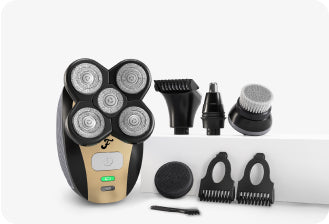
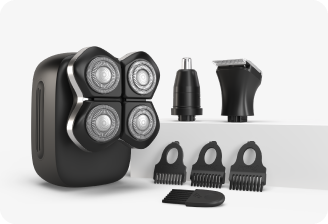
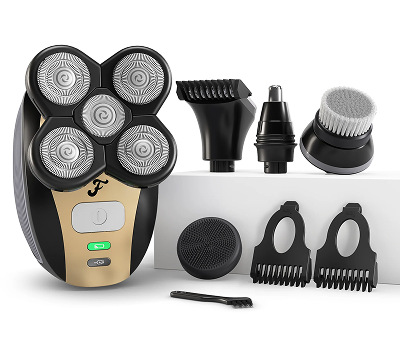
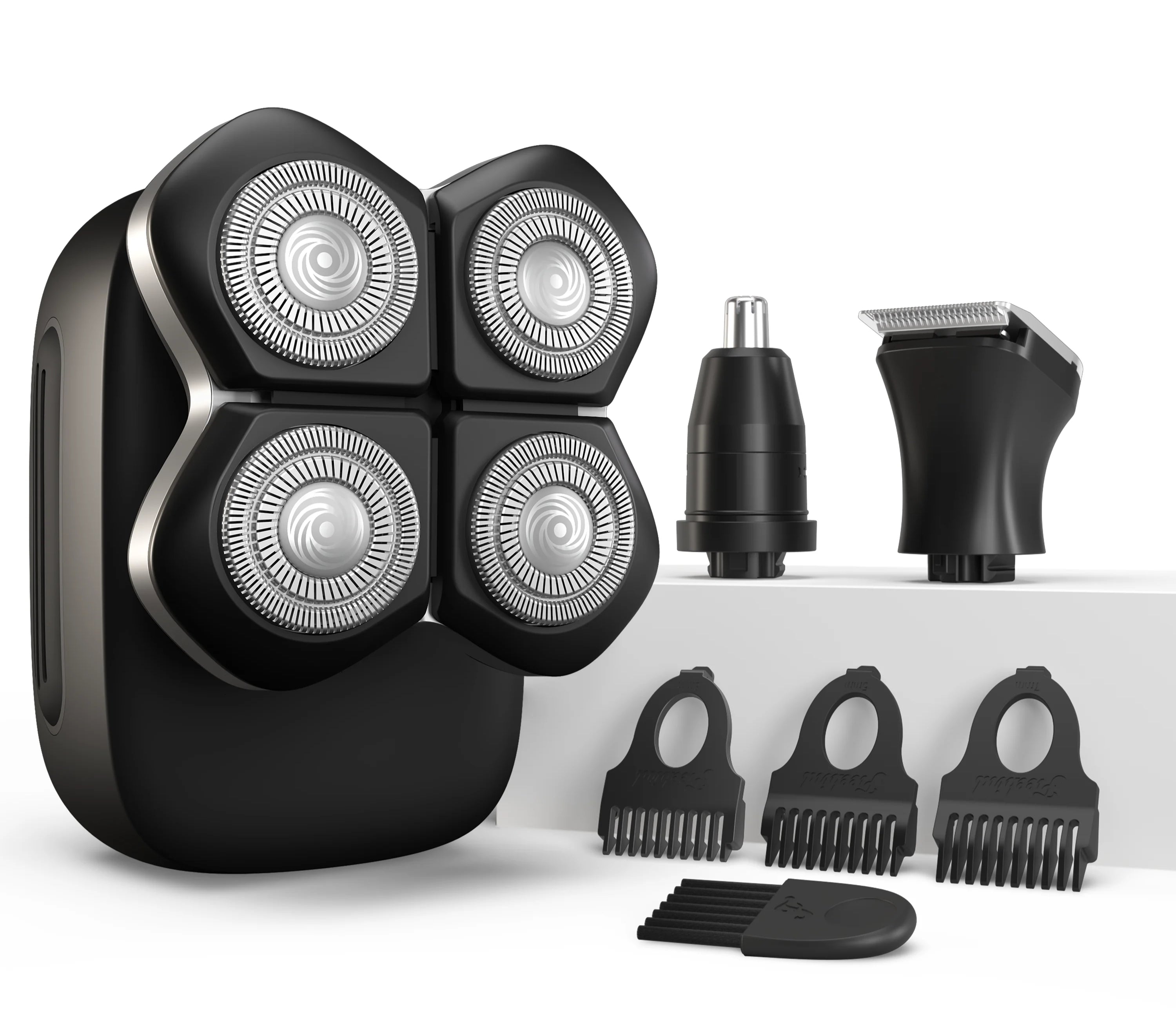
Electric razors are the cleanest travel setup by a wide margin, and for anyone who shaves their head or does body shaving regularly, a purpose-built electric shaver is worth taking seriously as your dedicated travel razor.
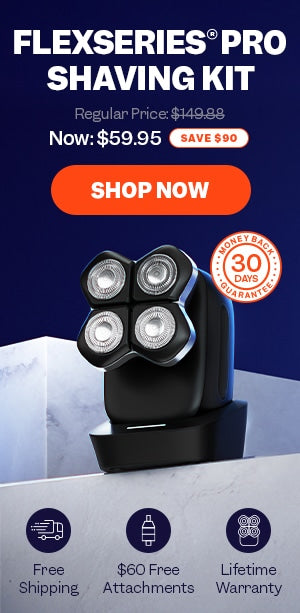
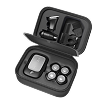
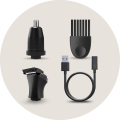
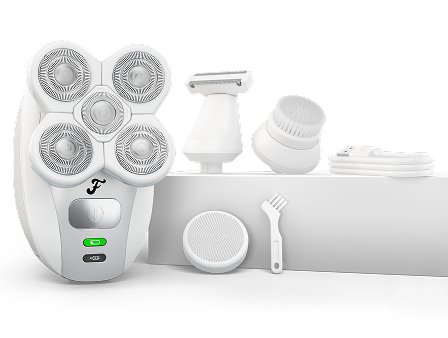
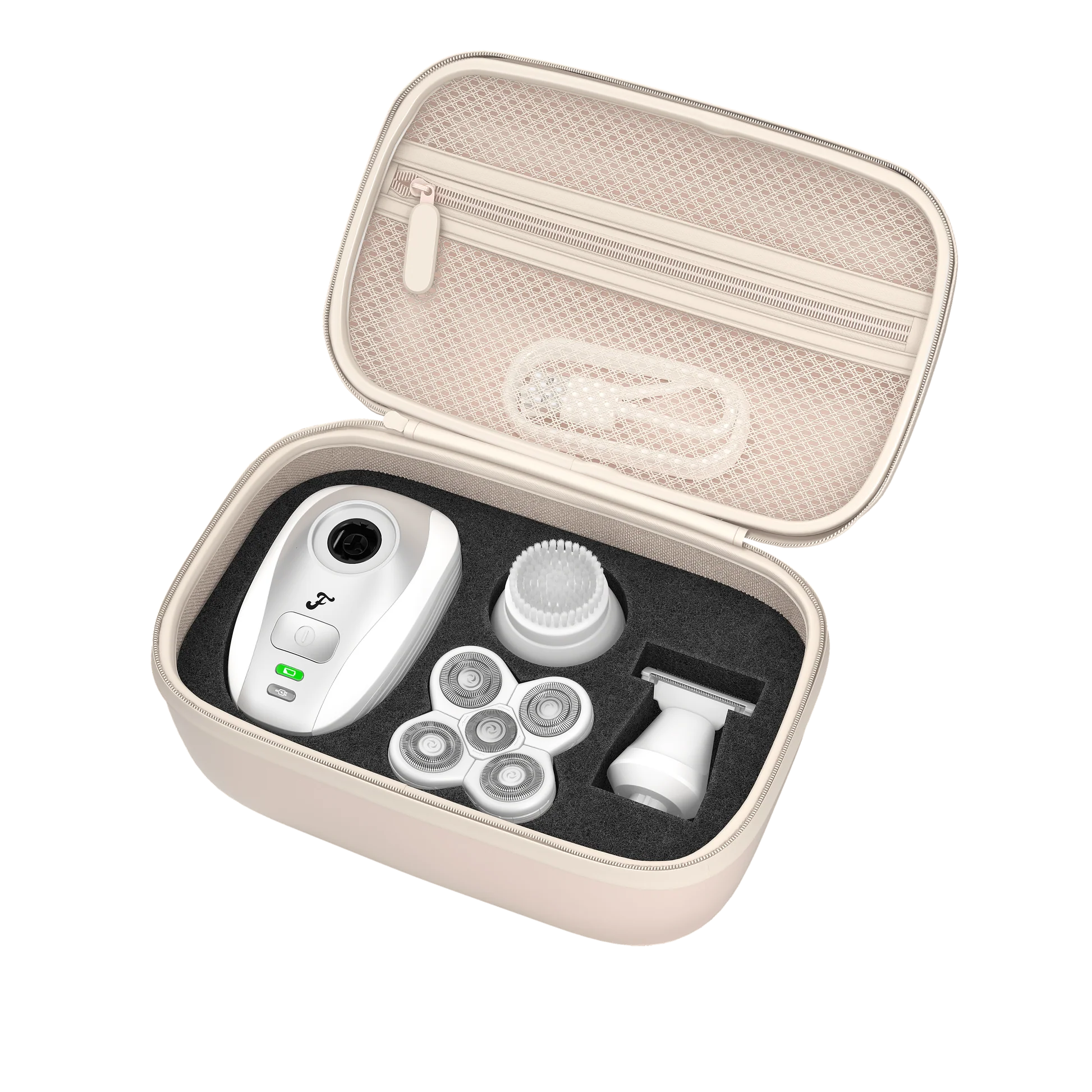
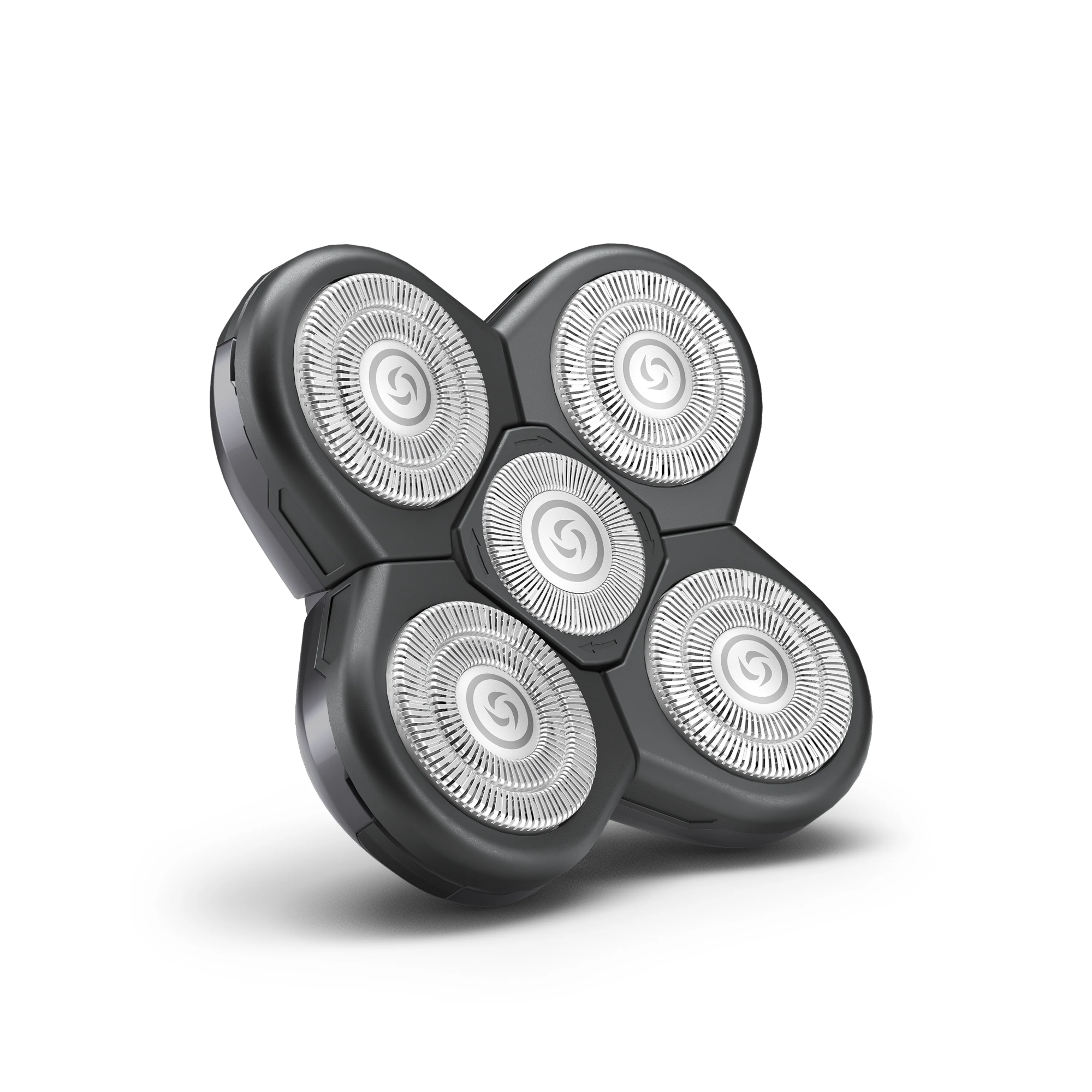
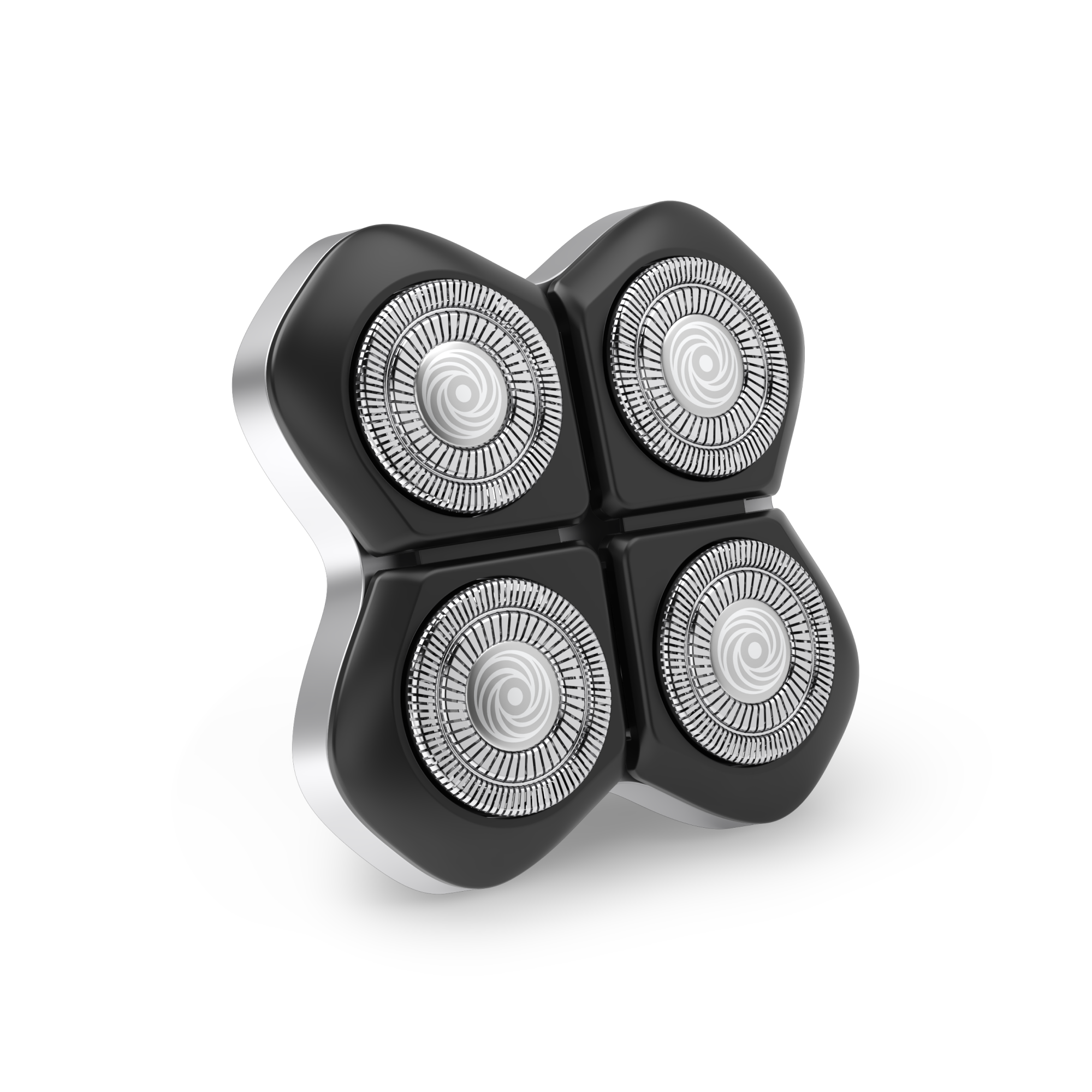
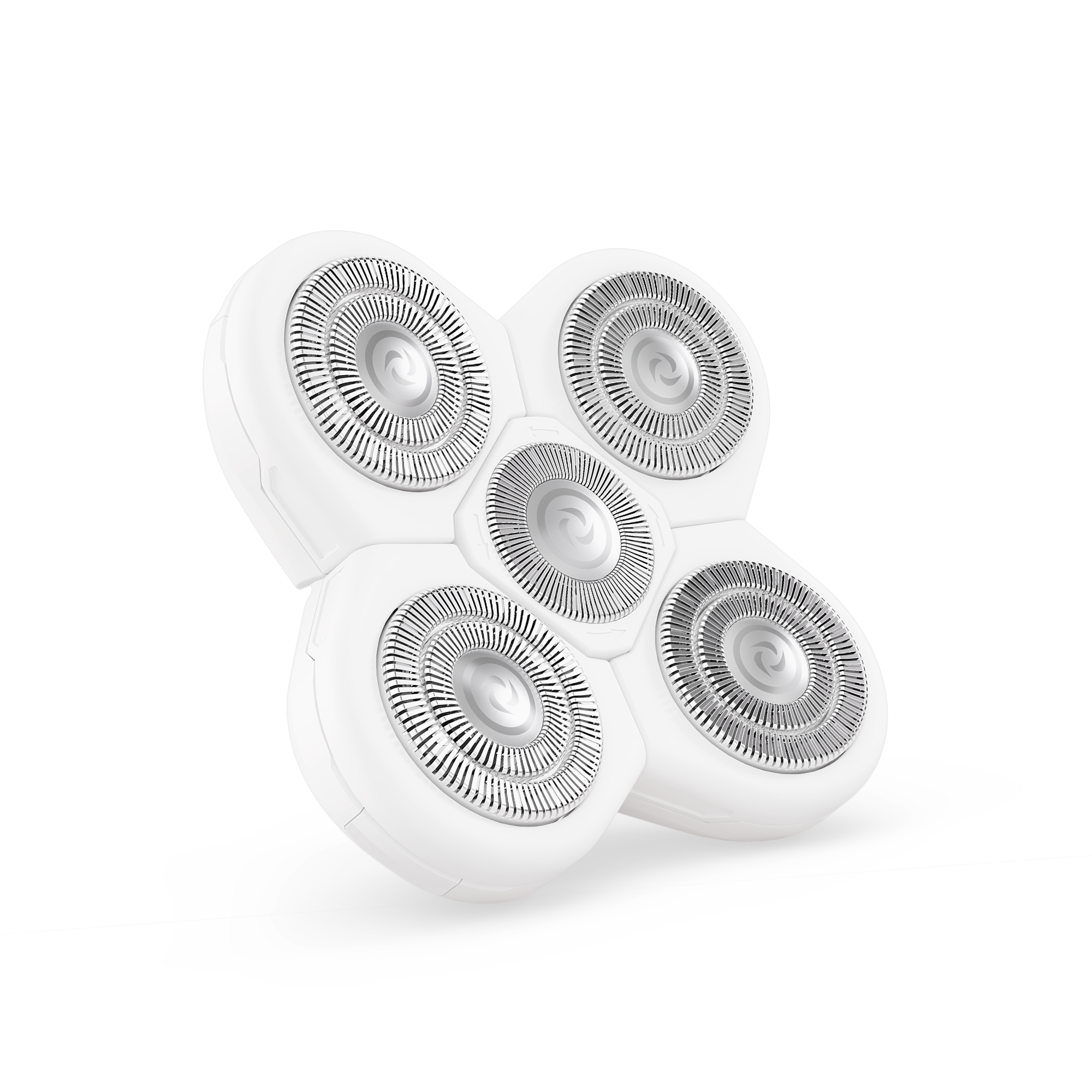
Freebird's FlexSeries Pro was built for grooming on the go. It's IPX7 waterproof, has a travel lock, and provides a safer shave. It replaces your sometimes "painful and bloody" manual shave routine for sure. Charge the device before you leave, toss it in your carry-on, and you're done. No blade and replacement cartridges to remove, no spillable batteries, nothing to declare, nothing to lose at the checkpoint.
The built-in lithium-ion battery means it should stay in your carry-on rather than a checked bag, which is also where you'd want it anyway. With an electric razor, you comply with the permissible rules all the time.
Shaving Cream and Gel on a Plane

Your razor cleared security. Your full-size shaving cream might not.
The TSA's 3-1-1 rule covers all liquids, gels, and aerosols in carry-on bags:
-
Each container must be 3.4 ounces (100ml) or less
-
Everything must fit in a single, clear, quart-sized zip-top bag
-
One bag per passenger
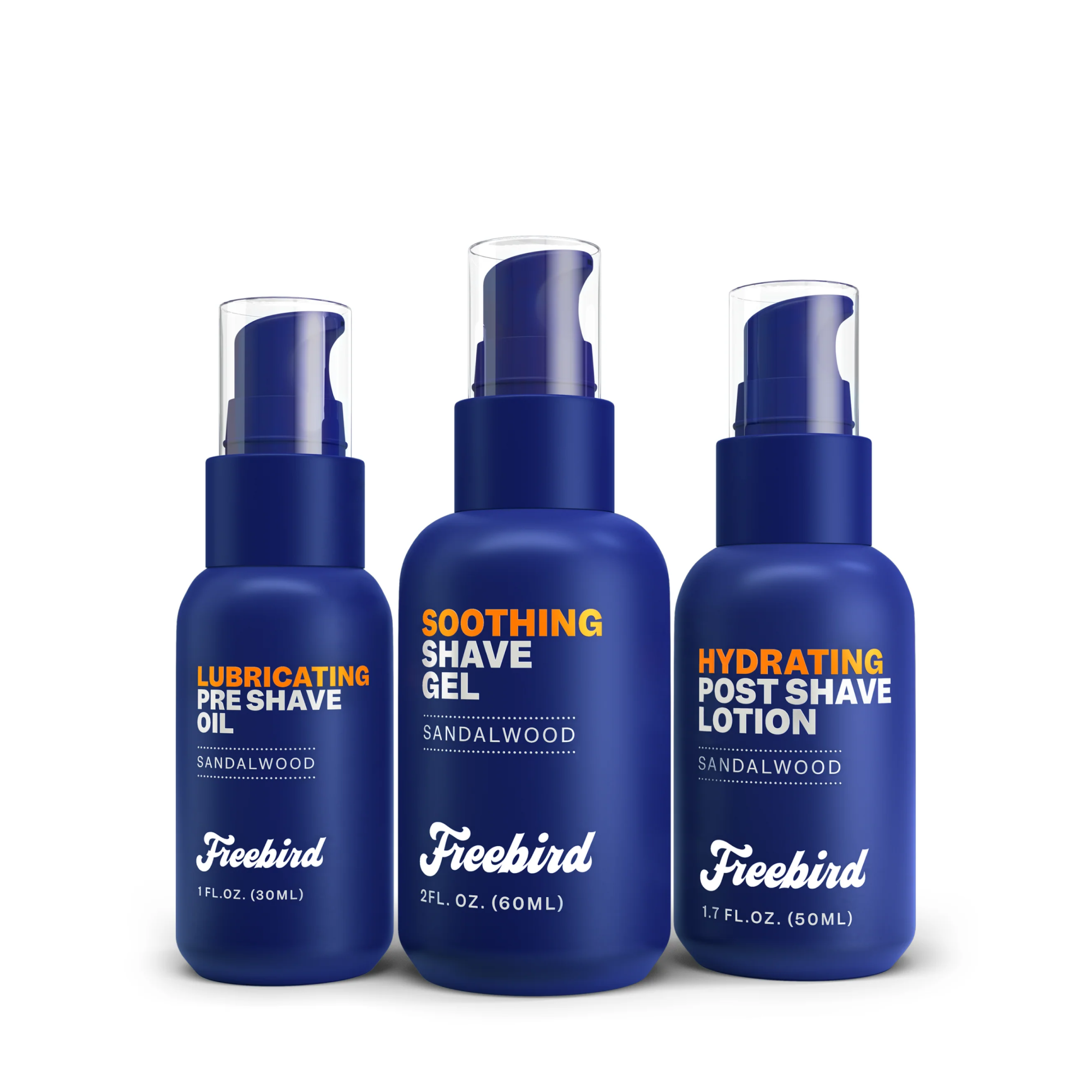
That standard can of shaving cream and most full-size shaving gel tubes have to go in your checked bag or get left at home. Travel-size versions of Cremo, Pacific Shaving Co., and most major brands come in sizes that fit the limit easily. The same goes for shampoo; anything over 3.4 oz stays out of your hand luggage. Pack smart and ensure your liquids bag isn't overstuffed.
Solid shave soap in a hard puck isn't a liquid, so it doesn't fall under 3-1-1. That said, a few TSA agents have flagged soft, creamy shave soaps in the past. The Sharpologist community has at least one documented case of a tub of shave soap being pulled because the agent considered it too gel-like. If it's soft enough to scoop with your finger, treat it like a gel to be safe.
Shaving brushes pass without issue.
International Travel: A Few Differences

TSA rules apply to U.S. departure airports. Once you're flying out of another country, you're dealing with that country's security authority, not TSA.
The general picture internationally is similar. The EU follows ECAC (European Civil Aviation Conference) guidelines, which largely mirror TSA on sharp objects. Loose blades are banned from cabin baggage. Enclosed cartridge razors pass. The 100ml liquid limit is the same. UK airports follow comparable rules post-Brexit.
Australia has historically allowed safety razor handles without blades in hand luggage, consistent with the current U.S. policy. For example, multiple travelers have confirmed the blade-out rule applies at Heathrow and major Indian airports as well.
Where it gets murkier is enforcement. Some countries' airport security checkpoints are more thorough than others. A few specifics worth knowing:
Some airlines also have their own carry-on policies that sit on top of the government security rules. Always check with your airline and the security authority for your specific departure country before flying. The official source in the U.S. is the TSA website, and it's worth bookmarking on your phone.
What Happens If TSA Confiscates Your Razor

It happens. Even when you've done everything right.
If a TSA agent decides to pull your razor, you're not going to win the argument at the checkpoint. Don't try. TSA officers have legal discretion, and no razor is worth a missed flight or an escalated situation in a security line.
If you haven't fully entered the secure area yet, you can ask to go back to check the item in a bag. Some airports allow this. If you've already passed through, that option is gone, and you won't have access to your items again until baggage claim.
There is a formal complaint process at the TSA if you believe an item was confiscated incorrectly. In theory, some confiscated items can be mailed back. In practice, it's slow and rarely worth the effort for a razor.
The honest reality: if a razor gets taken, it's usually gone. The wet-shaving community has mostly reached the same practical conclusion. If you can't afford to lose it, don't put it in a carry-on. Buy a pack of disposables at the airport or pick something up at your destination. A 4-pack of BIC Sensitive costs a few dollars. Not your best shave ever, but a shave.
Why These Rules Exist

Sharp objects in a pressurized cabin are a genuine security concern. The distinction TSA draws between a cartridge blade (sealed in plastic, not detachable) and a loose double-edge blade (two exposed edges, nothing covering them) is reasonable.
The frustration from the shaving community isn't with the blade rule itself. It's with the inconsistency. Policy changes that go uncommunicated. Agents with different information at different airports. Razors were confiscated on trips where everything was done correctly.
That gap is real and documented. It's why, if you travel carry-on only with any regularity, an electric razor removes the question entirely. You don't have to keep up with policy changes, cross your fingers at the checkpoint, or factor "might lose my razor" into the trip.
Practical Tips for Traveling with Razors

Here are a few tips to make passing through airport security a lot smoother.
-
Keep razor heads covered. Most cartridge razors have a plastic cap. Use it. Loose cartridge heads in a toiletry bag will nick you when you're digging around for something else.
-
For safety razors in checked baggage, use a blade bank or fold a small piece of cardboard around the blade and tape it shut. Don't rely on just the razor case. Ensure that everything sharp is wrapped before handing over the bag.
-
Pack a clear toiletry bag for travel-size liquids. It speeds up the 3-1-1 check at security, and you're less likely to get pulled over for a secondary inspection.
-
If you regularly fly with hand luggage only, invest in an electric shaver to make travel hassle-free. The FlexSeries Pro is built to be your primary shaver and travel buddy, too! It comes with a travel case that makes travelling with it much easier.
-
Screenshot the TSA page before you fly if you want something to reference. It won't override an agent's decision, but it's better than nothing.
The Bottom Line
Disposable and cartridge razors fly with you, no questions asked. Safety razor handles can go in a carry-on as long as every blade stays out of that bag entirely. Blades and straight razors belong in checked luggage, wrapped up properly.
If you travel carry-on only and want to stop thinking about this every time you pack, get an electric razor. It clears security everywhere, every time. No blade rules, no policy changes to track, no chance of losing something you actually like at the checkpoint.
That's really all there is to it.
FAQs
Can I Bring a Gillette Razor on a Plane?
Yes. All Gillette cartridge razors, Fusion, Mach3, and SkinGuard are allowed in carry-on bags. The cartridge encloses the blade in plastic, which is why they pass without issue. Replacement cartridge packs are fine to bring in carry-on, too.
Are Venus Razors Allowed on Planes?
Yes. Venus razors follow the same rules as any other cartridge razor and are permitted in carry-on and checked bags. Replacement Venus cartridges can also go in your carry-on.
Can I Bring a Schick Razor on a Plane?
Yes. Schick cartridge and disposable razors are allowed in both carry-on and checked bags, the same rules as Gillette.
Can I Bring Replacement Razor Cartridges on a Plane?
Yes. Replacement cartridges for any brand, Gillette, Schick, Billie, Venus, are allowed in carry-on. Keep them in the original packaging if possible.
Can I Bring a Disposable Razor in My Carry-On?
Yes. Fully disposable razors are allowed in carry-on and checked bags with no restrictions. The blade is sealed inside a plastic housing and can't be removed.
Are Safety Razor Blades Allowed on Planes?
Not in carry-on bags. Safety razor blades, double-edge blades, and any loose blade outside of a plastic cartridge are prohibited in carry-on luggage. They must go in your checked bag, wrapped or in a secure case.
Can I Bring a Safety Razor Handle in My Carry-On?
Yes, as of late 2024, handles without blades are permitted in carry-on bags. The condition is strict, though: razor blades themselves are restricted in the carry-on bag. If you're flying carry-on only, ship blades ahead or buy them at your destination.
Can I Bring Razor Blades in Checked Luggage?
Yes. Safety razor blades, DE blades, and straight razor blades are all allowed in checked bags. Wrap them securely so no one handling your bag gets cut.
Can I Bring a Straight Razor on a Plane?
Not in carry-on. Straight razors are prohibited from the cabin and must go in checked luggage only. If you're packing one, wrap it securely, as you would any sharp object in a checked bag.
Can I Bring an Electric Razor on a Plane?
Yes. All types of electric razors, rotary, foil, corded, and cordless, are allowed in both carry-on and checked luggage. Keep the device stored in your hand luggage before and during the flight.
Do Electric Razors Have to Go in Carry-On?
They don't have to, but if yours has a lithium-ion battery (most modern electric razors do), carrying it on is the safer move. The FAA recommends lithium battery-powered devices travel in cabin baggage rather than checked bags.
Are Battery-Powered Razors Allowed on Planes?
Yes. Battery-operated razors are allowed in carry-on and checked bags. Standard AA and AAA batteries are fine in both. Lithium batteries should travel in carry-on.
What Type of Razor is Best for Air Travel?
An electric razor. No blade rules to worry about, no risk of confiscation, and no need to track policy changes every time you fly. For head and body shavers specifically, the Freebird FlexSeries Pro is built for this. Pack it in your carry-on, and that's the end of the conversation.
Can I Bring Shaving Cream on a Plane?
Yes, in carry-on if the container is 3.4 oz (100ml) or less and fits in your quart-sized liquids bag. Full-size cans and large tubes must go in checked luggage. Solid shave soaps aren't liquids and don't fall under 3-1-1, though very soft, gel-like soaps have been flagged at some checkpoints.