

Rotary Shaver Buying Guide: Heads, Motors, and More
November 13, 2024 • 19 min read
Buying a rotary shaver used to be simple. Three heads, decent motor, done. But walk into any store (or scroll through Amazon) today, and you'll see rotary shavers with five, seven, even nine heads. Claims about ultra-powerful motors and "advanced blade technology" are everywhere.
So, what actually matters when buying a rotary shaver?
I've tested rotaries, made plenty of mistakes, analyzed competitor products, read tons of user experiences, and learned what separates the winners from the overhyped junk.
Our rotary shaver buying guide breaks down what to look for in a rotary shaver, how to choose the right one for your needs, and where marketing hype gets in the way of a good shave. By the end, you’ll know exactly what matters, what doesn’t, and which features actually improve your daily shave.
What Makes a Good Rotary Shaver?

A rotary shaver is only as good as the combination of its parts working together. You can have five heads, but if the motor is weak and the blades are dull, you'll get a terrible shave. You can have the sharpest blades in the world, but if they're mounted on a bulky head that can't follow your skull's contours, you'll miss spots.
Think of it like a car. You need the right balance of horsepower (motor), handling (head flexibility and count), reliability (blade quality), and comfort (ergonomics). A Ferrari engine in a cheap plastic body won't drive well. Same with rotary shavers—all the components need to work together.
The four factors that determine shave quality:
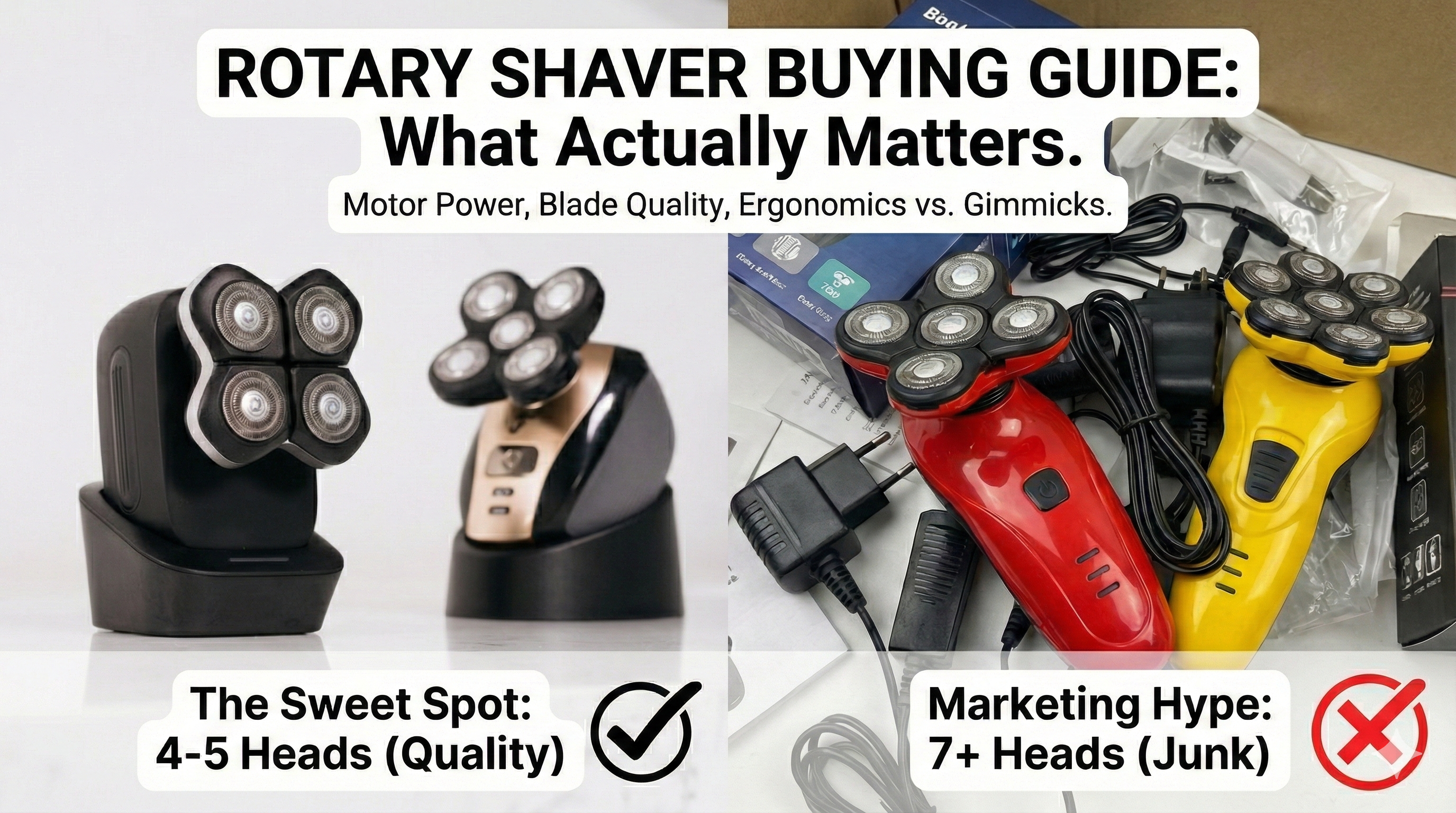
- Head count determines coverage area and maneuverability. More heads = faster coverage but less precision. The sweet spot depends entirely on what you're shaving (your head needs 4-5 heads, your face needs 1-3 heads).
- Motor power determines whether those heads can actually cut through your hair. A weak motor powering 7 heads means some heads spin slower than others, creating uneven results and missed spots. A strong motor powering 4 heads gives you consistent, efficient cutting.
- Blade quality determines closeness, comfort, and how long before you need replacements. Premium surgical-grade steel blades stay sharp for 12-18 months. Cheap alloy blades dull in 6 weeks and start pulling hair instead of cutting it.
-
Features and ergonomics determine daily usability. Battery life, waterproofing, grip comfort, and cleaning ease all impact whether you'll actually enjoy using the shaver or whether it becomes another abandoned gadget in your bathroom drawer.
How Many Heads Should Your Rotary Shaver Have?

More is often touted as better in grooming. But with rotary shavers boasting anywhere from three to nine(!) heads, the choices can be overwhelming.
Do more shaving heads provide a better shave, or is there a case where less is more?
The truth? It depends on what you're shaving.
The Sweet Spot: Matching Heads to Your Needs

For head shaving: 4-5 heads
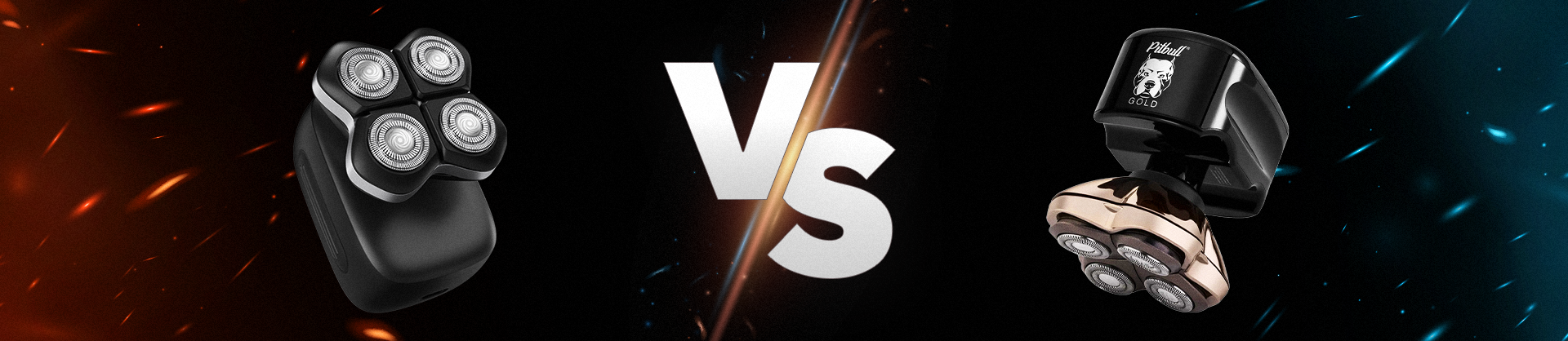
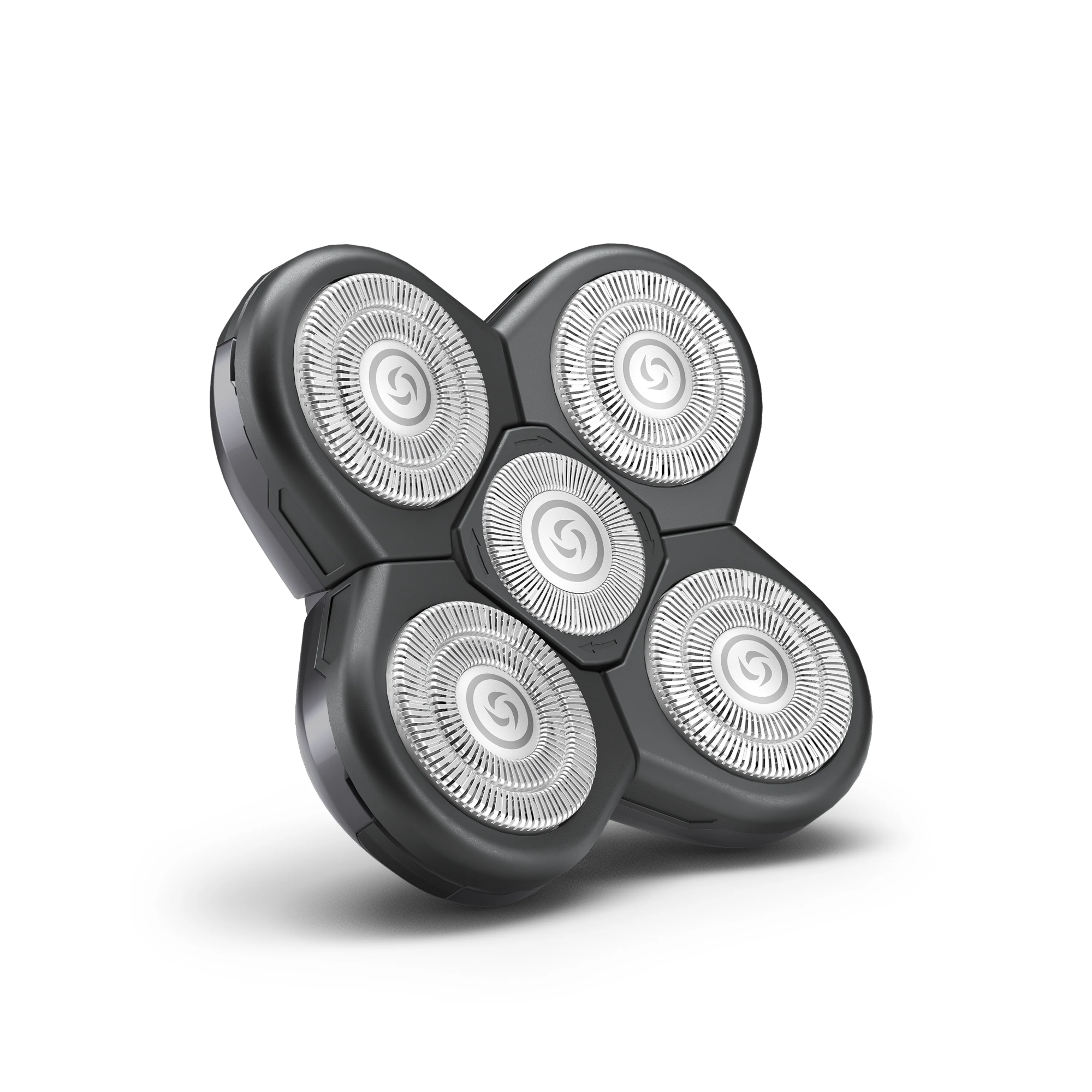
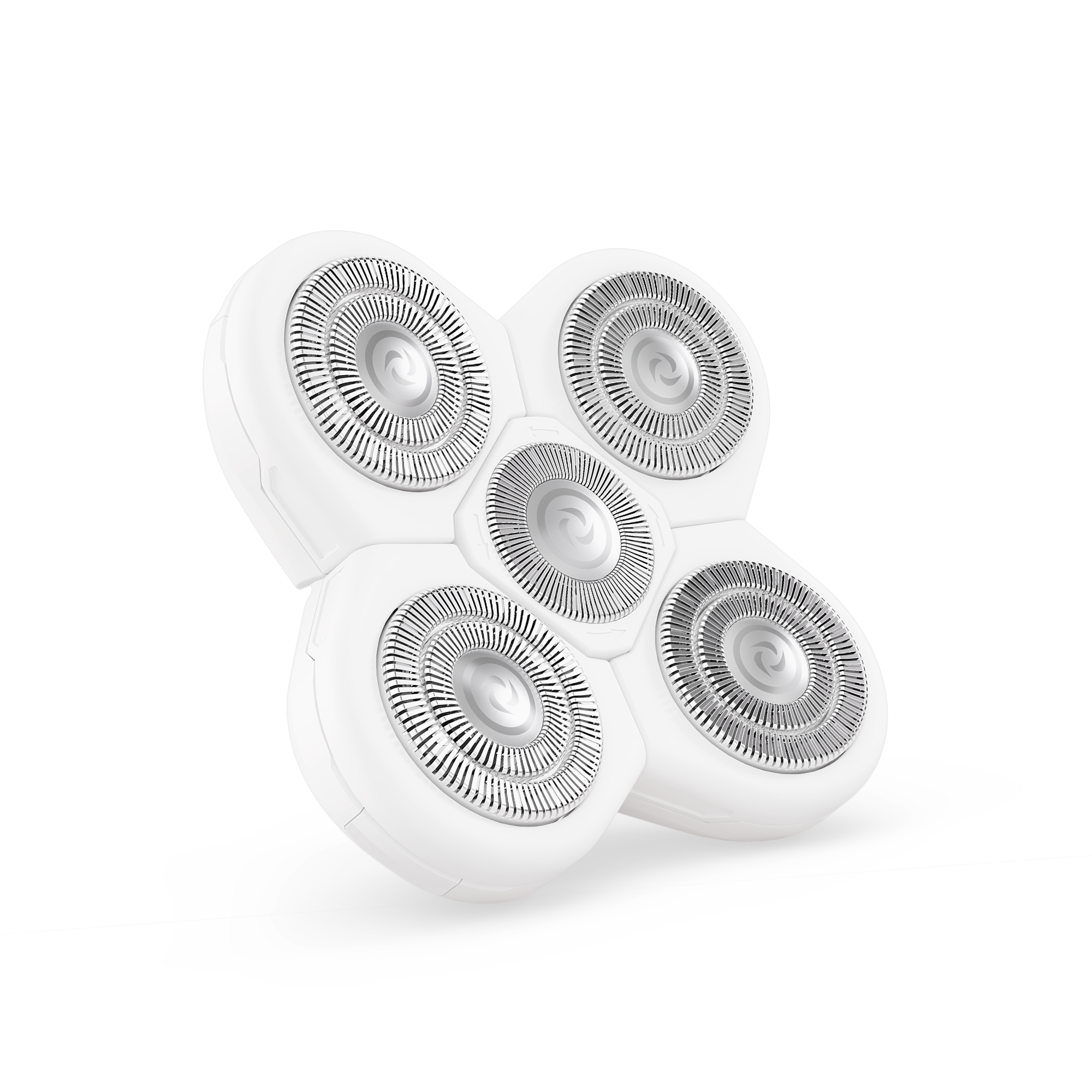
Your head is a large, curved surface. More heads mean more coverage, faster shaving, and fewer passes. Four to five independently flexing heads can follow your skull's contours while covering enough area to make the job quick. Brands like Freebird (FlexSeries with 5 heads, FlexSeries Pro with 4 heads) and Skull Shaver (Pitbull series with 4 heads) have optimized this range.
For facial hair: 1-3 heads
Your face has more complex contours: nose, chin, jawline, neck. Fewer heads mean better maneuverability and precision. Three-head rotaries have been the standard for facial shaving since 1966 for good reason. Single or double-head shavers work great for travel or touch-ups.
For body grooming: 3-4 heads
Larger areas like chest or abs benefit from the coverage of 3-4 heads, while still being maneuverable enough for detailed work.
Advantages of Multiple Heads
-
More coverage area
-
Faster shaving time
-
Fewer passes
-
Lower risk of skin irritation
Disadvantages of Multiple Heads
-
Less mobility
-
Difficulty reaching certain areas, like behind the ear and neck areas
-
More expensive replacement blades
-
Bulkier
Why 7-9 Head Shavers Are Marketing Hype
Let me be blunt: those 7 and 9-head shavers you see flooding Amazon are garbage.
Here's why:
- The motor can't power them all. A standard rotary motor struggles to maintain consistent RPM across 7-9 heads. What happens? Some heads spin slower than others, creating uneven shaving and missed spots.
- They're too bulky to maneuver. Try navigating a 9-head shaver around your ears or along your jawline. It's like trying to park a bus in a compact space.
- Replacement costs are insane. When those cheap blades wear out (and they will, fast), you're looking at $40-60 for replacement heads. At that point, you might as well buy a new shaver.
- They skip quality for quantity. These brands spend money cramming more heads onto a shaver instead of investing in better blade materials or stronger motors.
Stick with 4-5 heads max. Anything beyond that is a red flag.
Features that Matter and Which Ones Don't

Motor Power & RPM: Why It Matters More Than Head Count
Here's something most rotary shaver buyers don't know: a 3-head shaver with a strong motor will outperform a 5-head shaver with a weak motor every single time.
Some of those 5-head Amazon shavers look impressive on paper. In reality? Felt cheap. Shaved like garbage. The motor couldn't maintain speed when you press it against your scalp, and it would slow down or even stall mid-shave.
Compare that to the FlexSeries Pro's adaptive motor. It senses when it hits thicker hair and automatically adjusts power to maintain consistent speed. No stalling. No tugging. Just smooth, efficient cutting.
What RPM Actually Means for Your Shave
RPM (rotations per minute) tells you how fast the cutting heads spin. But here's what manufacturers won't tell you: the RPM number means nothing without consistent torque.
Think of it like a car's horsepower. A Ferrari has 700 HP, but that power is useless if the engine dies when you hit a hill. Same with shavers. A motor rated at 10,000 RPM is worthless if it drops to 6,000 RPM under load.
Here's what to look for:
-
For head shavers: 7,000-9,500 RPM
The FlexSeries runs at 8,500 RPM and can handle dense head hair without slowing down. The FlexSeries Pro's adaptive motor can push even higher when needed. -
For face shavers: Look for "actions per minute" instead
Philips rates their facial rotaries at 150,000 actions per minute (that's how many times the blades touch hair, not how fast they spin). Different measurement, but what matters is: does it maintain that speed under pressure?
Blade Technology & Quality: Where Your Money Should Go
If I could only upgrade one component on a rotary shaver, it would be the blades. Not the motor. Not extra heads. The blades.
Why? Because blade quality determines:
- How close you shave
- How long between replacements (and how much that costs you)
- Whether you get irritation and razor burn
- How long to finish your shave
A $150 shaver with premium blades will serve you better than a $300 shaver with mediocre blades.
Self-Sharpening vs. Regular Blades
Most rotary shavers claim "self-sharpening blades." Here's what that actually means:
The rotating blade constantly rubs against the metal guard/comb. This friction keeps the cutting edge relatively sharp through normal use.
Does it really work?
Sort of. Self-sharpening blades will maintain cutting ability longer than non-self-sharpening blades. But they still dull over time. The question is: how long until they need replacing?
Premium self-sharpening blades (Philips): 12-18 months of daily use before you notice a performance drop.
Budget self-sharpening blades: 3-6 months before they start tugging and missing hairs.
Blade Materials Matter
Not all steel is created equal.
- Surgical/medical-grade stainless steel: Harder metal holds an edge longer. More expensive to manufacture but lasts significantly longer.
- Titanium-coated blades: Some shavers feature titanium coating for durability. Sounds fancy, but in practice, I haven't noticed a huge difference vs. quality stainless steel.
- Standard stainless steel: What most budget shavers use. Dulls faster. Rusts if you don't dry them properly.
-
Cheap alloy blades: Absolute garbage. If you see "high-carbon steel" on a $30 shaver, run. These blades might last 6 weeks before they're pulling hair instead of cutting it.
Battery Life & Charging
This is huge and often overlooked.
What you want: At least 60 minutes of runtime per charge. 90 minutes is ideal.
Why it matters: A full head shave takes 3-5 minutes. At 5 minutes per shave, a 60-minute battery gives you 12 shaves. Shave every other day? That's 24 days between charges.
The FlexSeries Pro's 90-minute battery means I charge it once a month. No joke. I shave my head 3 times a week, takes about 4 minutes each time. I get 22 shaves per charge.
Compare that to cheaper shavers with 30-40 minute batteries. You're charging weekly, and after a year, that battery degrades to 20 minutes. Now you're charging twice a week. Annoying.
USB-C vs. Proprietary Chargers
USB-C charging is a must-have feature in 2026.
Why? You already have USB-C cables for your phone, laptop, and tablet. You can charge your shaver with any of them. No need to pack a special charger when traveling.
The Philips Norelco Head Shaver Pro lacks USB-C (still uses a proprietary charging stand). This is my biggest complaint about an otherwise excellent shaver.
Some cheap shavers claim "USB charging" but include a USB-A to proprietary port cable. That's not real USB charging. That's a proprietary charger with a USB plug.
Corded vs. Cordless Operation
Can the shaver work while plugged in?
Skull Shaver Pitbull: Yes
Remington Balder Pro: No (cordless only)
FlexSeries Pro: No (cordless only)
Is this a dealbreaker? Not really. If you buy a shaver with good battery life, you'll rarely need corded operation. But it's a nice backup if you forget to charge.
Waterproofing (IPX Ratings Explained)
IPX7 waterproofing should be standard on any rotary shaver you buy in 2026.
What IPX7 means: The shaver can be submerged in 1 meter of water for 30 minutes without damage.
Translation: You can rinse it under the sink, use it in the shower, and not worry about killing it with water.
Why waterproofing matters:
- Cleaning is 10x easier. Pop the heads off, rinse under hot water, done. No fiddling with tiny brushes.
- Shower shaving works. Some people prefer shaving in the shower. IPX7 makes it possible.
- Wet shaving with gel. Waterproof shavers can be used with shaving cream or gel without damaging the motor.
IPX5 vs. IPX7: Some cheaper shavers only have IPX5 (can withstand water jets but not submersion). This means you can rinse them briefly, but can't use them in the shower. Read the fine print.
Ergonomics & Grip
An uncomfortable shaver is a shaver you won't use.
What makes a rotary shaver comfortable:
- Weight distribution: Choose a rotary that feels balanced. Some cheaper shavers are heavier and front-loaded, making your wrist tired after 2 minutes.
- Grip texture: Rubber grips are a must if you shave in the shower. Smooth plastic = slippery and dangerous when wet.
- Handle design: Head shavers need clearance between the shaving unit and the body so your fingers don't cramp. The Pitbull Silver Pro SX5 nails this with cutouts for your fingers. The Remington Balder Pro fails here.
- Button placement: The power button should be easy to reach without shifting your grip. Some shavers put the button in stupid places where you accidentally hit it mid-shave.
Try the "back of head" test: Can you comfortably reach the back of your head while holding the shaver? If the design forces you into an awkward wrist angle, pass.
Maintenance & Cleaning
A shaver you can't easily clean is a shaver that won't last.
- Manual cleaning (water rinse): Should take 30 seconds max. Pop the head unit off, rinse under hot water, shake dry, put it back. Done.
- Cleaning stations: Some premium shavers include automatic cleaning docks (like Braun's Clean & Charge stations). These are nice, but not necessary for rotary shavers.
- Removable vs. fixed heads: The FlexSeries Pro and Philips Head Shaver Pro let you remove individual cutters for deep cleaning. The Remington Balder Pro has a single fixed unit. Both work fine, but removable heads are easier to thoroughly clean.
- Lubrication requirements: Quality rotary shavers don't need frequent oiling.
Features You Can Skip

- Digital displays: Seeing "74% battery" vs. a 3-bar LED doesn't change your shave. Adds cost for minimal benefit.
- "Turbo mode": Remington markets this heavily. In practice, it makes the shaver slightly faster and louder. Not worth paying extra for.
- Pop-up trimmers: The Balder Pro includes one. It's awkward to use and worse than a $15 dedicated trimmer. Skip it.
- Wireless charging pads: Gimmick. Slower than wired charging and adds $30 to the price.
- Multiple speed settings: Unlike foil shavers where speed changes can help sensitive skin, rotary shavers work best at one optimal speed. Multiple speeds = unnecessary complexity.
Focus your money on: battery life, blade quality, and motor power. Everything else is negotiable.
Common Buying Mistakes (and How to Avoid Them)

People waste hundreds of dollars on rotary shavers that promise the world and deliver disappointment. Here are the most common mistakes buyers make.
Mistake #1: Focusing Only on Head Count
Many buyers get lured by 7-head "premium" models from unknown brands. These shavers often flood Amazon with hundreds of 5-star reviews (many likely fake) and price tags around $89.
They almost always disappoint.
The motor can't power all 7 heads effectively, so they spin at different speeds. The build quality is typically poor (flimsy plastic). They break within months.
Pro-Tip: Head count is just one factor. A well-designed 4-head shaver beats a poorly-designed 7-head shaver every time.
Mistake #2: Ignoring Motor Power
Some buyers purchase decent-looking 5-head shavers without checking motor specs. These shavers advertise "powerful cutting" but don't list RPM anywhere.
When used, the motor slows down or stalls under pressure. Shaving takes twice as long because users have to apply feather-light pressure.
Pro-Tip: Always check motor specs (RPM, power, torque). If they're not listed, that's a red flag.
Mistake #3: Overlooking Replacement Costs
A $45 rotary shaver seems like a great deal, until replacement heads are needed 6 months later. Replacement heads often cost $38 or more. Worse, they're frequently out of stock.
Many buyers end up purchasing a whole new shaver because finding replacement heads becomes impossible.
Pro-Tip: Before buying, search "[shaver model] replacement heads" on Amazon. Check availability and price. If heads cost 75%+ of the shaver's price or are hard to find, pass.
Mistake #4: Buying the Wrong Shaver for the Use Case
People sometimes buy 3-head facial rotaries to shave their heads. While it works, shaving takes forever because the coverage area is tiny. Full coverage requires dozens of passes.
Pro-Tip: Match the shaver to the use case. Head shavers for heads. Face shavers for faces. Don't try to make one do a job it wasn't designed for.
Mistake #5: Trusting "Best Seller" Rankings
Amazon's "best seller" badge doesn't mean best quality. It means most units sold. Budget shavers priced at $29.99 will always outsell $100 shavers because more people can afford them.
Buyers who choose based on rankings alone often end up with cheap shavers that break within months.
Pro-Tip: Ignore rankings. Read actual user reviews, especially negative ones. Look for patterns (e.g., "motor died after 6 months" appearing in multiple reviews).
Mistake #6: Falling for Gimmicks
UV sanitizers, "diamond-coated" blades, "AI-powered" motors, "massage nodes."
Shavers marketed with these gimmicks rarely deliver meaningful improvements to shave quality.
Pro-Tip: Focus on fundamentals. Good motor, quality blades, solid build. Everything else is marketing fluff.
Best Rotary Shavers by Head Count
Best 5-Head Shavers
Freebird FlexSeries - Best Five-Head Rotary Shaver

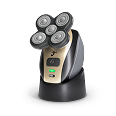
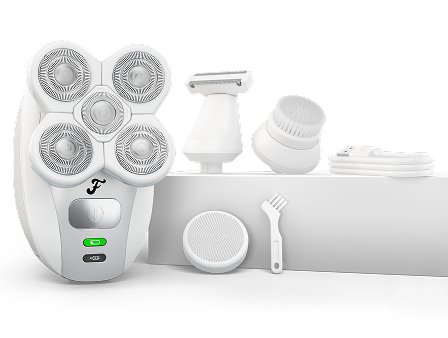
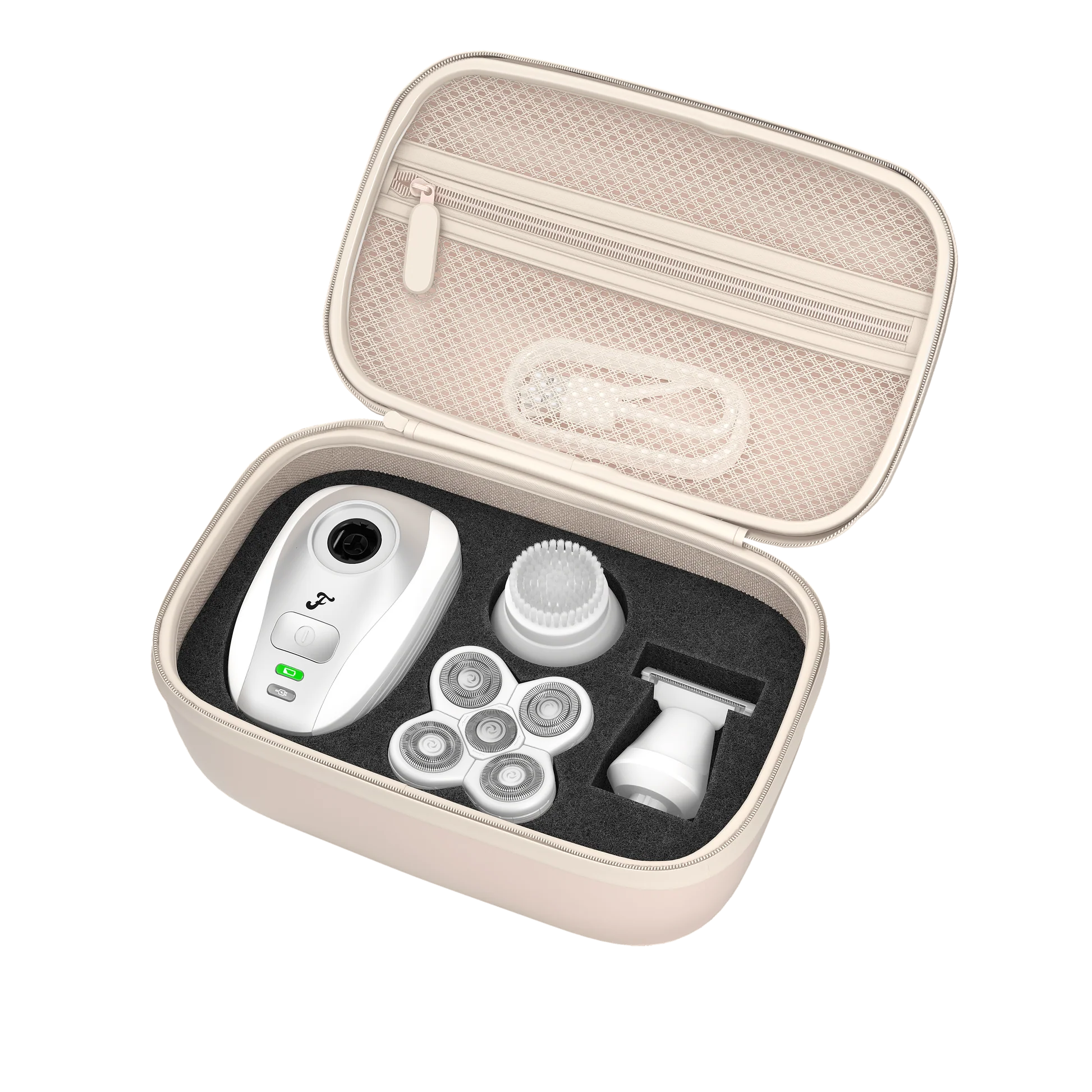
The FlexSeries from Freebird is one of the best-selling five-head rotary shavers. The FlexSeries uses those five heads to gobble up more surface area than a standard three-head razor. But five heads only matter if your blades are sharp enough and your motor is strong.
The FlexSeries has super-sharp ScalpSafe technology blades that are safe for sensitive scalps and lasts for up to 50 shaves. It also has an 8,500 RPM motor that makes quick work of even coarse and thick hair.
Buy from the Freebird website or on Amazon.
Remington Balder Pro: Runner Up for Best Five-Head Shaver

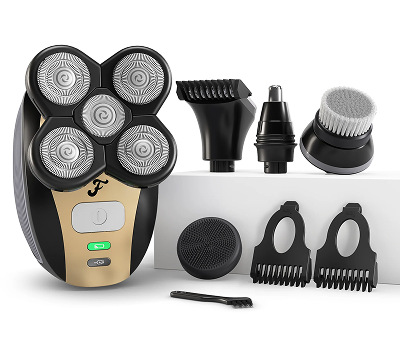
The Remington Balder Pro gives you five rotary heads from a known and trusted brand.
What you get: A large 5-blade shaving unit with decent coverage, WeTech waterproofing for wet/dry use. The heads flex inward to follow your skull's contours, and the rubberized grip makes it comfortable to hold.
The good: For the price, the Balder Pro delivers surprisingly solid performance. It shaves close enough for most people, the motor has adequate power (though not as strong as the FlexSeries or Philips), and it's lightweight. Replacement heads cost around $38 and are easy to find.
The bad: Battery life is the biggest weakness at only 50 minutes (40 in real-world use). It takes 4 hours to fully charge. The motor can bog down on really thick hair. You can't use a palm grip because there's not enough clearance between the head unit and body.
Buy from their website or on Amazon.
Best 4-Head Shavers
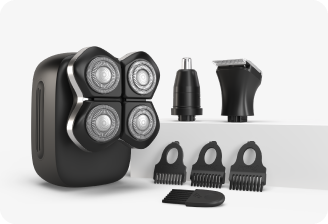
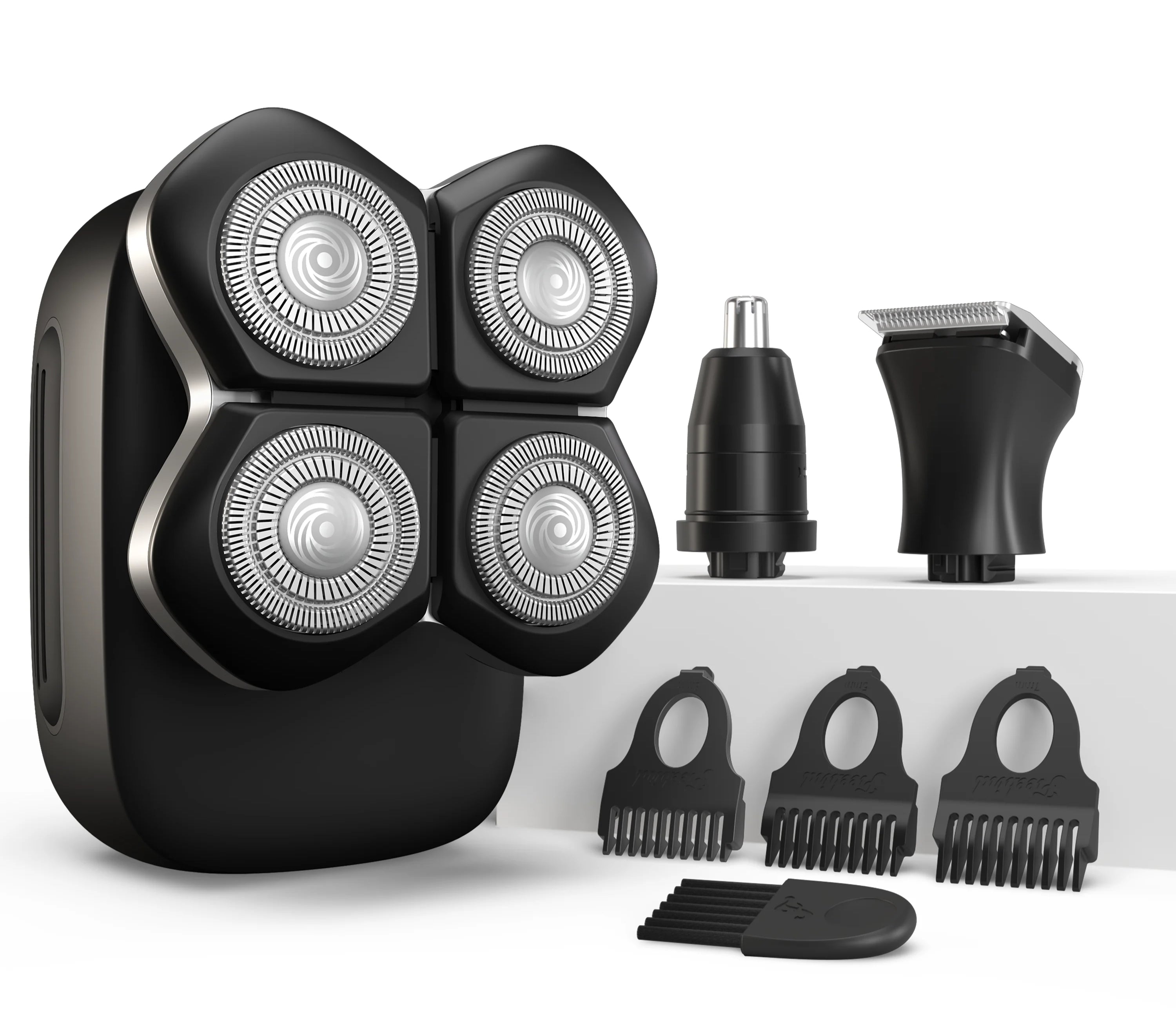
Freebird FlexSeries Pro - Best Four-Head Rotary Shaver

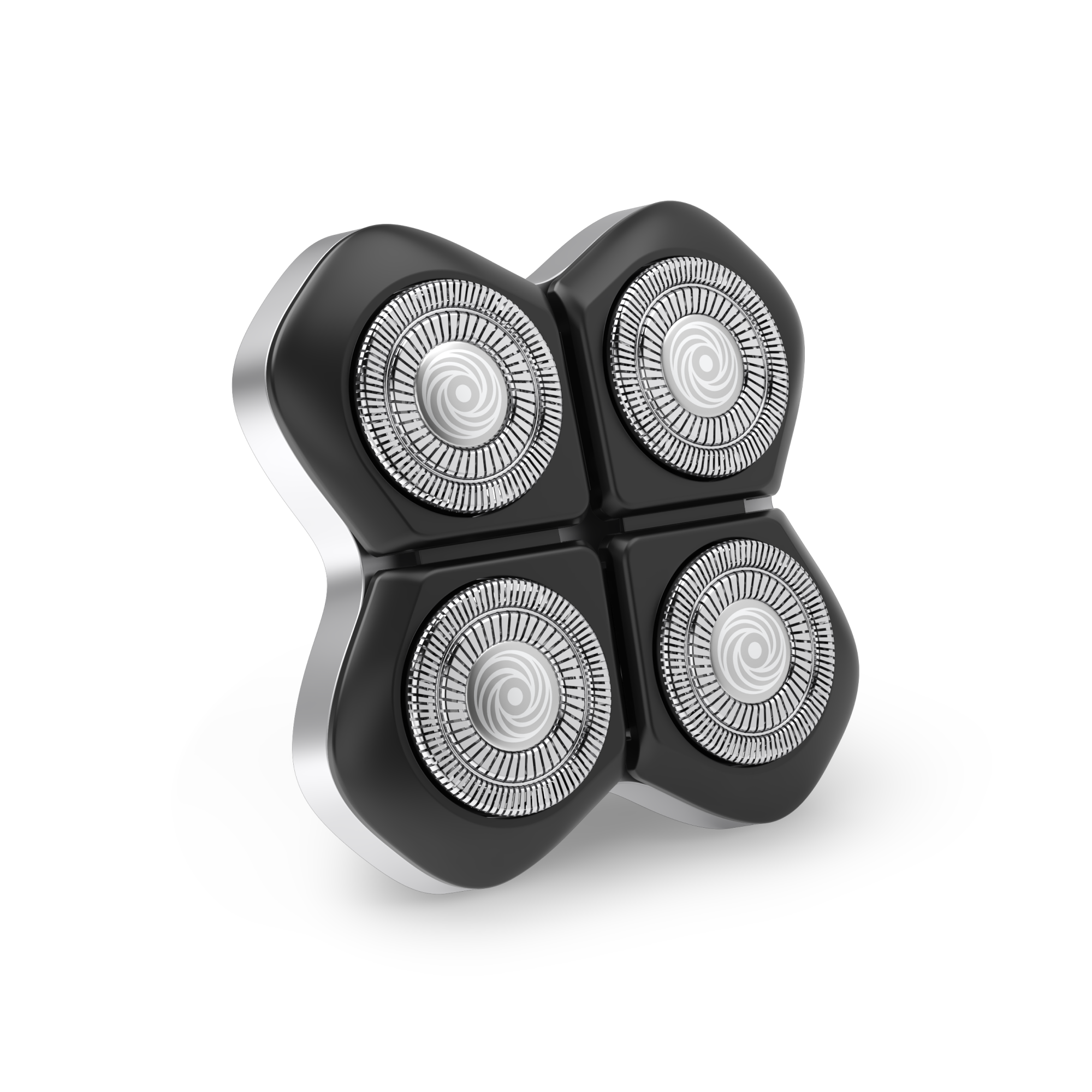
If you prefer a shaver with four heads, the Freebird FlexSeries Pro is the best rotary shaver you can buy.
The latest rotary shaver from Freebird has features that are hard to beat:
-
Smoother shave
-
Enhanced four-blade design
-
Easier cleaning
-
More powerful and adaptive motor
-
IPX7 waterproofing
-
Travel lock feature
-
$60 worth of free attachments (nose trimmer, hair clipper)
Get one now for only $59.95
You can read our article on the best head shavers for a comprehensive list.
Philips Head Shaver Pro 7000 - Premium Four-Head Option

The Philips Head Shaver Pro 7000 is the newest dedicated head shaver from Philips, and it's one of the best-built rotary shavers you can buy.
What you get: Four independently suspended rotary cutters (each on tiny springs), a powerful motor that rivals the FlexSeries Pro, 90-minute battery life, and Philips' legendary build quality. Comes with a rinse tub and hard travel case.
The good: This shaver is smooth. Those spring-suspended cutters make a real difference in comfort and closeness. The motor has serious torque and never stalls, even on thick hair. The shave is incredibly forgiving—I can press harder without irritation, especially on the back of my neck. Philips' track record of reliability is rock-solid.
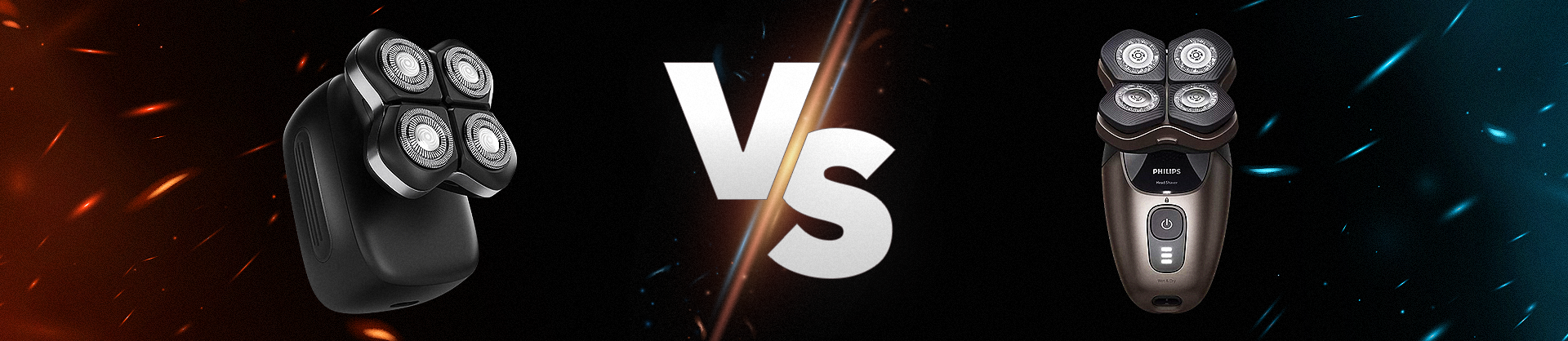
The bad: It's larger than the FlexSeries Pro (not for small hands). No USB-C charging (uses a proprietary stand). The body doesn't have finger cutouts like the Skull Shaver Pitbull, so if you have thick fingers, the palm grip might feel cramped. It's pricier at $120+ (though the 9000 Series at $150 includes an extra set of replacement heads).
Buy from their website or on Amazon.
Skull Shaver Pitbull Silver PRO SX5 (2025 version): Entry Level Four-Head Pitbull Shaver

The Skull Shaver Pitbull Silver PRO SX5 is the entry-level model in the Pitbull line, which now offers a more powerful motor.
What you get: Four rotary heads (Carver 4 Head Pro Blades) with spring-loaded flexible shaving heads, the signature Pitbull palm grip design, longer 70-minute battery life (previous model 60), and IPX6 waterproofing.
The ergonomics are still best-in-class. Those finger cutouts make reaching the back of your head effortless. It's comfortable, easy to clean, and the shave is smooth. It's also around $40 cheaper than the Gold PRO GX5.
The Silver Pro SX5 only comes with a 1-year warranty.
Buy from their website or on Amazon.
Best 3-Head Shavers
Philips Norelco CareTouch - Best Three-Head Rotary Shaver

The Philips Norelco CareTouch costs around $55 and comes with ComfortCut self-sharpening blades that last for 2 years. The blades are also made from hypoallergenic steel that's rust-resistant, protects skin, and prevents ingrown hairs. The CareTouch also has IPX7 waterproofing, so you can shave wet or dry.
Buy from their website or on Amazon.
Skull Shaver Palm - Best Compact Three-Head Shaver

The Skull Shaver Palm is a standout 3-head rotary shaver known for its unique two-finger fit design. The natural grip helps you move it across your face and head easily without any wrist strain.
The battery lasts 60 minutes, and IPX5 water resistance means you can shave wet or dry.
You also get an ear and nose trimmer for extra grooming tasks.
It doesn't shave as close, though, or as fast as its 4 to 5-headed cousins.
Buy from their website or on Amazon.
Best 1-2 Head Shavers
Norelco Travel Men's Shaver PQ 208 - Best Two-Head Rotary Shaver

The Philips Norelco travel shaver is our top pick for a two-head rotary shaver. It's a cordless shaver with self-sharpening blades that Philips claims last for 2 years. Its 60-minute battery life is more than enough for weekend trips.
Buy from Amazon.
Yoose Mini Shaver 2.0 – Best Premium Two-Head Shaver

If you want a travel shaver that doesn't feel like a cheap plastic toy, the Yoose Mini Shaver 2.0 is the answer. It’s a dual-head rotary shaver housed in a weighted zinc alloy body that feels incredibly premium in your hand. It's IPX7 waterproof, has a powerful 8,000 RPM, motor, and has a travel lock for those weekend getaways. Yoose claims battery will last 30 days on a single charge (based on 3 minutes a day usage).
The good: It’s roughly the size of a Case of AirPods, making it the ultimate "pocket" shaver. Despite the tiny size, it uses high-grade German steel blades that stay sharp far longer than the budget rotaries you see on Amazon. It charges via USB-C and features a magnetic head that pops off easily for a quick rinse.
The bad: Because it only has two heads, it’s not meant for a full head shave unless you have a lot of patience. It’s strictly a facial touch-up tool. Also, the alloy body is a fingerprint magnet, so you'll be wiping it down often if you like your gear looking shiny.
Buy from their website or on Amazon.
OpDooke Mini Electric - Best Single-Head Rotary Shaver

For $29, you get a single-head shaver with a powerful 6500 RPM motor, 30-day battery life (at 4 minutes a day usage), and so small (it's the size of an egg) you can put it in your pocket.
It has IPX7 waterproofing, so you can shave either wet or dry.
Buy from Amazon.
Norelco Series 5000 - Best Single-Head Facial Hair Remover

Don’t let the branding fool you; while this is often marketed for "facial hair removal," it is one of the best single-head rotary razors on the market from a major brand. It uses a hypoallergenic rotary head that’s perfect for guys with sensitive skin who need to clean up specific areas like the neck or around a beard.
The good: It’s incredibly gentle. If you struggle with razor bumps on your neck or irritation around your Adam’s apple, this single-head design allows for surgical precision that a 3-head or 5-head unit can't match. It features a built-in light so you can actually see the stray hairs you're targeting, and the head is made from surgical-grade steel.
The bad: It's battery-operated (usually a single AA), which feels a bit dated in 2026 compared to USB-C options. It also lacks the raw power of the Enchen or OpDooke, so it's best for "peach fuzz" or very light stubble rather than thick, coarse hair.
Buy from their website or on Amazon.
Enchen Z3 – Best Portable Single-Head Mini

The Enchen Z3 is a "puck" shaver that fits in a coin pocket. It’s a dedicated single-head rotary that uses a 360-degree floating blade system, which is a rare find for something this small.
Despite being roughly the size of a golf ball, it packs a high-torque motor (9100 RPM) that doesn't bog down on 2-day stubble. The automatic grinding technology means the blades sharpen themselves while you shave, extending their life significantly. It charges via USB-C and is fully IPX6 waterproof, so you can rinse it directly under the tap or use it with your favorite shave gel.
The downsides? It’s strictly a maintenance tool. If you’re trying to clear a full week of growth, you’re going to be there for a while. It lasts for 60 minutes on a single charge, good enough for a week-long trip, but it's not meant to be your primary daily driver for months on end without frequent charging.
Buy from their website or on Amazon.
The Bottom Line
A rotary shaver with more shaver heads doesn't mean it's better. The number of shaving heads is just one aspect that determines the result of your grooming routine. You also have to consider blade quality and motor speed. If the blades are dull or the motor isn't that powerful, the benefits of a single or multiple-head rotary shaver will be diminished.
The number of heads on your rotary shaver matters whether you're shaving your head, face, body, or pubic hair.
A four or five-head rotary shaver is the best option for head shavers. Don't fall for the overhyped 7 to 9-head shavers you may encounter on Amazon.
You can't go wrong with single to three-head rotaries for shaving your facial hair.
Stick with market-leading brands for the best shaving experience.
FAQs
How Many Heads Should My Rotary Shaver Have?
Four or five heads are the sweet spot for your scalp, while three heads are perfect for your face. This setup gives you enough coverage to move fast without the shaver becoming too bulky to handle. Anything over five heads is usually just a gimmick that slows down the motor.
What's More Important: Number of Heads or Motor Power?
Motor power is more important than head count. A strong motor powering 3-4 quality heads delivers better results than a weak motor struggling with 7-9 cheap heads. Look for shavers with 8,000+ RPM and adaptive motors that maintain speed under pressure.
How Much Should I Spend on a Rotary Shaver?
Plan to spend $60-150 for a quality rotary shaver that lasts. Budget options ($30-50) typically have weak motors and cheap blades requiring frequent replacement. Factor in replacement head costs over time; a $100 shaver with long-lasting blades often costs less than a $40 shaver needing heads every 4 months. Don't waste money on overpriced shavers.
Are 7 or 9 Head Shavers Worth the Money?
No, 7-9 head shavers are marketing gimmicks. The motor can't maintain consistent power across that many heads, they're too bulky to maneuver, and replacement costs are high. Top brands like Freebird and Philips stick with 4-5 heads because that's what actually works.
What RPM Should a Rotary Shaver
Have?
You want a shaver that hits between 7,000 and 9,500 RPM and can stay at that speed even when cutting thick hair. While some brands use different numbers like "actions per minute," the goal is always a motor that won't stall. A consistent 8,000 RPM motor will always give you a better shave than a 10,000 RPM motor that dies the moment it touches your skin.
How Often Do I Need to Replace Rotary Shaver Heads?
Quality rotary heads last 12-18 months with daily use. Premium brands like Philips and Freebird offer the longest blade life. Budget shavers need replacement every 3-6 months. Replace heads when you notice tugging, missed hairs, or increased shaving time.
Can I Use a Rotary Shaver for Both Head and Face?
While possible, it's not ideal. Head shavers (4-5 heads) are bulky around facial contours. Face shavers (1-3 heads) take forever on your scalp. For best results, use dedicated tools. If you must choose one, the FlexSeries Pro with 4 heads offers the best compromise.
Should I Get Cordless or Corded?
Cordless is standard in 2026 and more practical. Look for 60+ minutes of runtime and USB-C charging. Corded operation is a nice backup, but rarely needed if you buy a shaver with good battery life. Some budget shavers only work cordless, which becomes problematic when batteries degrade.
Do More Heads Mean a Better Shave?
Not necessarily. Shave quality depends on blade sharpness, motor power, and head flexibility. A well-designed 4-head shaver with a strong motor and quality blades outperforms a poorly-designed 7-head shaver every time. More heads provide faster coverage, but only if the motor can power them effectively.